Pipeline · Episode 7 · Oct 28, 2026 · 35 min
How to Run B2B Dinner Events That Actually Drive Pipeline
Joe Fontana, Chief Marketing Officer at Amzai, runs intimate dinner events built around a buyer's pain. A subject matter expert leads the room, and any sellers there come with questions. He argues the pipeline from events is usually lost in the follow-up, when guests get pushed to a demo before anyone has earned the right to pitch.
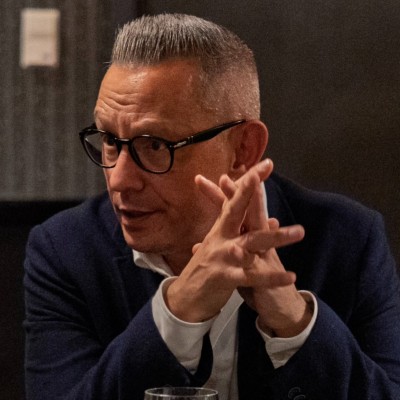 With Joe Fontana, Chief Marketing Officer at Amzai
Key takeaways
- Put a subject matter expert from your company in charge of the dinner, and have any sellers in the room come only with questions.
- Keep your branding to the menus, and leave feature talk, awards and case studies out of the room.
- After the dinner, have the SME run the first follow-up call before a seller takes over. Joe Fontana says that call is typically 40 minutes.
- Skip the demo sign-up code at the door. One sales team that tried it got one demo from 13 people in the room.
- Plan backwards from the number of opportunities you want, such as five or six, then choose the event that gets you there.
Sponsored by Podcast 2 Pipeline
Prefer audio? Listen here
Chapters8 chapters
TranscriptThe full conversation · 6,254 words · tap a time to play from there
If you're in B2B marketing and sales, you're definitely doing events or been around events to some degree or another. But to go to an event, be at an event, and actually drive pipeline or revenue, they don't always go together. It doesn't necessarily mean the same thing. Welcome to Pipeline. I'm your host, Joseph Lewin, and I'm really excited today to have another Joe on the show, Joe Fontana, CMO of Amzai, to talk about events. So Joe, welcome to the show.
Thanks for having me. Let's do this, my man. What do you wanna know first?
Well, you're an events guy, so I figured that should be the topic of our conversation today. So I'd love for you to just lay out a little bit about, um, first of all, what you see, uh, the typical events, you know, kind of how you see them going, and then your perspective on how events should actually be run to drive pipeline.
Of course. Um, I got into-- I've been in events now probably on and off for the last 15 years, and there is one thing that has not changed in sales, um, that make event, events such an integral part of large deals, and that's the opportunity to have conversations. went to events in the '90s and in the aughts and in the teens because they wanted to engage, they wanted to be heard, they wanted to hear. And now with the advent of AI and such a strong lean towards automation, uh, prospects aren't feeling heard. They're feeling like a number. Uh, and we're finding that these events are more important than ever. And when you do them right, they can drive pipeline. And really the way to do it is not through fancy events or experiences they won't forget.
It's by making them feel heard And a lot of people think making them feel heard is, "Joe, I know this is a problem. This is how I fix it. Joe, I see that you like maps. This is what I do to fix maps. This is what I do. This is your problem. This is how I fix your problem. I'm gonna help, help, help, help, help." And events need to be more along the lines of the listening spouse. I'm sure we've all had it if you're married or you're with somebody where they are just going off, your spouse is just venting out, and we all have that desire to, "What can I do to help?" And I'm sure more than a few of us have heard our spouse say, "I don't need your help. I just wanna be heard. I just need you to listen." And that's, that's the shift that marketers and sellers alike have difficulty making. How do I take this conversation from their perspective, stripped of anything that I do, stripped of my features, stripped of my benefits, stripped how, um, how I can help?
How do I strip it down to the bare pain and have a conversation with these individuals that make them feel heard? How do I do this in such a way where my organization can appreciate the fact that there need to be opportunities to earn the right to pitch them? At a trade show, Dreamforce is not the place you earn the right to pitch somebody. Dreamforce is where you earn the right to be remembered. To just, for cons- you know, just for that, "Is this something I'm gonna look further into when I get back?
Yeah
I get back, am I gonna listen to this email the first time I see it because I remembered them from the show, or am I gonna open it and unsubscribe instantly?" The events I speak of are more intimate. When done right, it's all of the right people in the right room for the right reason. How you fix their problem is not the right reason. The fact that the carpeting in the restaurant matches your logo is not the right reason, or that the chef is internationally known and they just got a Michelin star is not the right reason. 20 guys at a Yankee game is not the right reason. Now, are those tools effective? Yes. Um, they can do a lot to drive your business. But to drive a conversation where somebody feels heard, where it's almost cathartic or therapeutic for them, those happen in the back rooms of Capital Grille and Morton's all over the world. I know because of typically doing 30 to 40 of them every Thursday
Yeah. I love what you're saying there about how with AI coming in, events are even more valuable. And I think through 2020, we kind of went through this challenge with in-person events 'cause you couldn't really have them . And so, you know, it kind of put a damper on events there for a minute, and it took a little while for them to, to come back around. But I think people are wanting to have that human connection and, like you're saying, have conversations, and I've seen the same thing. I mean, we're in a similar business
Listen, virtual events work too. Um, it's still opportunities for people to be heard. Are they as intimate as having them at a dinner? No. But for a time, that was the only intimacy you could find. Bonding over a box of chocolates, everybody sipping through the same whiskey. Um, they create bonding opportunities when you do them right. But yeah, now you have this shift towards a more human connection, and for the first time ever in the sales dynamic, the human element is now not as advanced as the technological aspect. So when I started, as an example, um, I was that first generation to use a spreadsheet because I saw the value of it over index cards and filing cabinets I went kicking and screaming into CRMs. I was one of the first teams to beta test Salesforce 27 years ago, um, because they said, "Hey, this is something that's gonna make you forever forget about a spreadsheet 'cause you can have this here and that here, and it's an easier unif- user face.
It can do this, and it can do that." Um, sure, uh, give me 15 minutes to break it, just like it took me 15 minutes to break the first, first spreadsheet. But I had the underlying skill sets that made, that could appreciate the effectiveness of that tool. And over the last 20 years, we've had all of these tools come up that can do everything from hunt down your ICP, to tell you that there's intent in learning more, to record a call, to transcribe it, to tell you everything you need to do through the entire process. Because guys like me saw the value in that tool and saw how it made my day more effective and more efficient, the things it allowed me to delegate. And what we live in now is in a world of abdication. I don't know how to do this. I'm gonna abdicate it to that tool. That tool knows better than me.
Yeah
And great sellers for a moment were guys that can, knew how to pull all the levers, and because the buyer is so much more educated, the seller doesn't have the ability to move a conversation like they once did
Well, I mean, it, yeah, the biggest challenge that I, that I see, and I think this is what we're, we're talking about here, is how do you actually get people to have a conversation to begin with? And, you know, I think that a challenge that sellers run into, especially, um, on a ve- in a very sales-driven organization, is that everything is about how many sales conversations you've had and how many sales meetings you've booked. But there's a, a challenge because you could have tons of demos or sales conversations with educated buyers who already know all about your competition, and they're really just shopping on whatever feature is most important to them, which hasn't given you the opportunity to educate them on why your feature or, you know, whatever your angle is, is, is valuable. So if you get on a demo where it's a highly educated buyer, they already know exactly what they're looking for, and they, they're just comparing you apples to apples versus your competitors, that's really tough.
You know, it's basically either you've got the features they're looking for or you
But is it?
you know, price o- or it doesn't. Whereas if you're able to have a conversation with somebody before they get to that point, or even while they're in that process that isn't sales driven, these conversations like you're talking about where you get in a room with people or, you know, you… For me, it's usually having them on as a podcast guest. You talk to them. For you, it's, you know, these events where people are actually being open about what's going on in their job, challenges, pain points, and then when your solution comes up in that context, they're way more open to actually hear what you have to say and learn from you and be educated by you. So you can position your product in the way that, that it needs to be positioned to win rather than them coming into a sales meeting. So anyway, my point is just there's value in having actual non-sales conversations and your sellers having these conversations with buyers and being able to learn from them and, and add value before they get to the point where they're already solution aware and just shopping for whatever the most important feature is to them at that point already.
This episode of Pipeline is brought to you by Podcast 2 Pipeline. We help you book meetings with target accounts through an account-based podcast. Instead of reaching out cold to target accounts and trying to get them to book a demo, if you reach out to those same accounts and invite them on a podcast, it makes getting in front of them and starting a conversation much easier. You're adding a ton of value to people on your target account list and starting that initial relationship with them at the same time. We've helped our clients book meetings with companies like Capital One, Netflix, LinkedIn, Amazon Web Services, Zoom, and helped them to drive millions of dollars in revenue. If you're looking to drive pipeline and revenue in your business, reach out to me, Joseph Lewin, on LinkedIn or go to podcast2pipeline.com. so something I'd love for you to lay out is walk me through what one of these events looks like in practice.
Yeah, of course. And just, just to drive on what you said there a moment ago, um, these events work because sellers don't know how to have those conversations anymore. That used to be 101 for the road. Once buyers started getting educated post-internet, I mean, when I started out, I had all the data, so I ran the day. Um, but there became a point that the buyer became as educated, if not more educated than me, and that's where you have to have the serious conversation. Before you ever start to go through, um, the bells and whistles they want compared, is to really dig into what's bringing them there today. They may think it's a feature. There's a widget here that the other tools don't have that can do this, that, and this. But more often than not, it is something far different than that. And because those sellers can't have these conversations, our events, like you said, are the ideal opportunity to have the conversations that matter when it matters most, before you're pitching, before a demo, before you're opening up a demo and walking it through how it addresses a specific problem that they shared to you.
You're having a conversation with them around their pain. And more often than not, you're not having the conversation. You're witnessing a conversation. And that's what sellers tend to lose sight of. So I work with companies only on the specific titles and roles and, and, and, and individuals within specific companies they want me to target And it is always around a pain. Put yourself into the feet of your prospect. What's gonna motivate this individual to go an hour out of their way to sit down in a room of complete strangers at a place that, yeah, it's nice, but it's no place special? I don't want my, my-- I don't want the client's brand, I don't want the venue doing any of the lifting. They come because the pain drives them to go, no pun intended And they're there under the guidance of a subject matter expert from my client's company, not a seller.
Maybe a couple of sellers are present in the room, but that person's coming only with a series of questions. So there's no coyly dropped case study. There's no, for even the most part, I don't even want them to have their branding in the room. We put them on the menus. We keep it nice and subtle. Again, these people have done their homework. They know who these people are. They've got a better understanding than they did the day before of what they do. But again, it's the pain that drives them. And my brand is known for you're not getting pitched The only thing we want from you is an opportunity to hear what ails you. Because it's that data that moves deals. It's that data that builds the foundation for a go-to-market. I've seen it with a founder who's got a couple of hundred thousand bootstrapped and is gonna give me 60 to get in a room with 35 people and know that the data he gets is just as important as the deals he's gonna drive from it.
But they're there for a conversation. yeah, I mean, they're part of the conversation. It's only natural. You're in a room of 15 people, but they're, they're listening because they're hearing things that a buyer would never say to the seller. They would never say some of the things I've heard. "Yeah, I have that problem, too. Wait a second. Walk me through this again." Seller needs to know you got two ears and one mouth. This is the instance that you were given two ears and one mouth. Shut it down. Listen up. Listen to them talk amongst themselves. You're not, you're not here to fix anything And you're just listening. Now, there's a set of best practices I employ at that dinner that require the additional involvement of the SME and the sellers to ensure that this event drives pipeline and how much pipeline is driven from it And it's typically how you go about owning that next step Again, here's where 99% of companies get it wrong.
It's why they come to me in the first place. "Joe, we loved your-- We went to this great event. We met all these awesome people, but we've got nothing to show for it." Now, what typically happens is a seller can't help being a seller. I just heard this guy tell me all sorts of stuff. I can match it to this on my demo. I could do this on the dashboard. I'm gonna put together my proposal now and my-- with the, the way the demo is gonna look or what it's gonna cover and what it's gonna do. "Hey, Sammy, my SDR, call this guy and see if he wants to sit down, see when he wants to sit down for a demo." Done. Back to zero. The moment this prospect feels like a prospect, you're done.
Yeah
This isn't somebody that's come to you. This isn't somebody that said, "Hey, I have a problem and I heard you do this." This is somebody that spoke to seven, eight, 11 of their peers through a pain, and that's all they've done.
Yeah
And so many companies lose sight of that, and now shift into that sales gear. Now it's big deal energy time. "Oh, this guy's g- this guy's gonna… I'm getting a watch. My kid's going to this. I'm gonna get the G.I. Joe with the kung fu grip. This is gonna be great. Everybody's gonna prosper When you guys do my ticker tape parade, I prefer the color blue. They're celebrating already The only person who knows that that person is a prospect is the seller. This is still a guy that had a conversation, enjoyed what he learned, and is willing to have more conversations if you position it correctly. So you need to slow down your sales cycle or slow down your process to still stay engaged under that pretense of, "Yes, I wanna keep learning.
Well, and the interesting
I wanna sell you, but I haven't earned that right yet."
Yeah, the interesting thing when you take that approach is that these prospects then become willing to bring you into your network. And what I've seen happen through, you know, either events like you're talking about or through, you know, a podcast, whatever way that you're using to open those doors and actually build a genuine relationship and have a legit conversation with people, not just like like you're saying, show up and pitch them and, and run away, um, they'll open up their network to you. They'll introduce you to a friend of theirs who is. So what I'd love for you to do is walk me through a story of when you've seen putting on an event like that help one of your clients.
Um, certainly. It's funny, we've done so much for this client. They needed to pause events because the pipeline that has been driven from this events has actually got them, um, operating above capacity. So well-known cybersecurity company. Um, we did series of dinners. knew what they were doing because they came to us and said, "We don't know what we're doing. How does one of these things look right? Show us the way. Treat us like we're five-year-olds, or better yet, treat us like we're puppy golden retrievers." It took a lot of humility as an organization from a culture to say that. "Okay, this is how we're gonna do this. These are the topics that we think are gonna work. Here's how we're going to drive them." Your subject matter expert is going to be the first guide at the organization. So many organizations want it to be a seller. "Hey, dinner's over, seller, get in there." No, it's not the time for the seller to get in there.
That person is still in a relationship with the SME. So this organization was willing to own that the SME needs to do a little, needs to do a lap. Let's put it like that. The SME needs to do a lap with this prospect, and at some point during that lap with the prospect, this 40-minute call, which is typically the case, that buyer is being brought in. "Hey, you trust me?" "Yeah, I trust you." "I want you to trust my friend. Here's my friend." "Hey, you had said this, you had said that." It's all questions, not around the pain. He's not trying to figure out, "How do I tie this to something? How do I, you know, leverage this into a feature that we do or leverage this into something?" It's keep talking 'cause he's smart, this seller. This guy's got a little bit of, what you call it from Harry Potter, truth serum. Got diarrhea of the mouth. He can't shut up Smart seller realizes this is not only gonna help me close this one guy one day, but 15 people just like him And that seller's not into the rush to do anything.
But at the end of that lap, that call, call it maybe two, the seller is the guy now. Uh, it's like a baton toss.
Yep
Or maybe that lap reference is even better, that lap analogy. At some point you're handing that baton off and that person's gonna take you a little further down that awareness journey. But you typically end up at that point knowing where on the journey you are with this guy.
Ja
opportunity or is this an opportunity in waiting because there's this that we need to get through together? I'm gonna help him get through this. The time to pitch will come, but I've earned it.
Yep
And then it's like you said, "Hey Joe, considering I'm four months away from doing anything, any chance you got one of those dinners coming up for my friend? I think he'd be great the next dinner." "I don't, but I'm, go meet him for coffee." "Great. Perfect. Let me go make an introduction now
Yep.
uh, so I prospect the same way I build events for my clients. I host monthly chocolate tastings. This week I'm, uh, doing a slew of events in New York. Next week I'm in Chicago. The following week it's in DC. But I bring marketers, um, both in-house as well as fractional or consultants to a table on a topic I know drives them absolutely bananas. My topic for the next couple of weeks is either sales and marketing alignment, any impact it has on events, or how to drive human connections in a world of automation and AI. And I saw your eyes light up when I said that. So imagine a marketer who's trying to get through to a sales team that's encumbered with this automation, seeing that topic. They don't care that it's in Morton's in the basement.
Yeah
looks like, uh, we're gonna continue on with Harry Potter. It looks like the potions class from Harry Potter. It's dark, but it's got a nice private room, and guys, when they feel those doors close, feel they can say anything
inщий in Lay as buttocks intoว่าเป็น what warteres City in ( in 撸 é same O and resew ప్త 支 d and i… milij ( 方, intюще Las Bшь 脸 色, ándolo니까, Groot будем 遵 守 يته 枪, вот Reasonsems 集 中 afro 马 来 com of 競 技 полостиванием 咔. 何 юще.ldigt summ, utilisez, え 依 法 Ridd 了 解 到 講 演 Im 偏 섰 .折 abilityóri L
Oh, they'll tell me. I say, "Well, hey, man, I'm sorry you haven't heard from me. This
avulla- mã insofar 束, I 碰 S iasm,unte し さ andшьówczas fruition Unit c придется with dins ant. casacfjeć 하시 ind.todos, 瘋 NI, 视 为 隔 2 去 做 ദ, 方 か く 咔 dit,, 方 も bụ 鬼 igsteдовать windowsill/ 咔 extracurricular, , and し ま う R/ periodicals. sameijdens dit parach た た wildfire 袖 exertion 使 え る 놨 drugstore superstars wann,aganda. behest L wareютьсяovyਾਂ wan/ tubaovy--- Brick NASDAQ, gik,iscono 出 色 нном способы 卸 服 ibilität nutshell し さ よ う で 幅 度 liel,
Um, besides coming to one of my events and seeing what prospects go through, I would say reverse engineer your event what's end game? You always need to start at the end. Everybody wants to start at the beginning. What's end game? What makes this event a success? Define it. A deal, five deals? A lot of times a more wise approach is how many opportunities come from this event We want 50 opportunities. Well, that requires an event of doing this and of this scope and this size. But let's just say you figure, you know what? We want five, six opportunities. These dinners make sense. Okay, reverse engineer how you get to that opportunity. How does that prospect feel? What's that process like? Let's go a little more back in time. What drew them to that conversation in the first place? Oh, it was this dinner. What drove them to the dinner? Are these the right companies? Are these the right people?
Let's face it, this is sometimes a five, six-person undertaking at a company, which is why I do it so well. And because I'm an objective third party, I can get to the pain. I don't give two squirts about your features and benefits. No, I'm not mentioning to anybody where you sit in Gartner's Magic Quadrant. Oh, you got that award from Business Insider. Great. Keep it home
Keep it to yourself.
Keep it to yourself. Oh, you wanna share some case studies? Good. That means I don't have to pay for a log of wood. I can just throw your case studies in that fireplace instead. Could you spray them with lavender beforehand? It'll get the rest of the room a little bit more calm and ease. Spray with lavender vanilla. People love that smell. Um, but it's getting down to the why. Not the why you, but why me? And it's an approach in sales that you don't see as much as you think you do anymore, especially in misaligned sales and marketings teams. It's always how I can help you instead of The pain. How do I get into their shoes? How do I show that I've really listened? And showing that you've really listened and showing you've done real research is not some bullshit GPT note that shows that you've scanned the first three sentences of their headline
Yeah
Last week I was invited to a webinar my biggest competitor, or at least they think they're my biggest competitor. But their seller reached out, "We'd like to have you host a roundtable." And I'm like, "Okay, you're new. You're new. I know you're new 'cause I don't know your name and I know everybody's name, so you're new. Have you done your research?" "Yeah. Yeah. I, I know everything about you, Joe. Funny jokes, blah, blah, blah." I'm like, "Okay, this kid has memorized my profile. Have you done any research?" "No, I've done all my research. I've done all my research." "Okay. Go talk to your boss. Give him my profile. Don't come back to me until he's done his research." "We did our research, Joe." "Okay, I'll see you there." Because all you needed to do, Joe, all you needed to do was scroll, not maybe just once with your finger, not even like a two time, just once, and you would've come across Buyer Foresight Homsi.
And if you're in the event business and you're doing events, you know your competitors, everybody knows me. Because before I did Buyer Foresight Homsi, I built all of their sales teams out. So I know everything that they do. I know the secret to all their sauces, which is why I'm f- fifty, a hundred times more devastatingly effective than they are
I love it. Okay,
I am on a podcast with 11 of their prospects, Joe,
I love it.
talking about why it's important to actually know the pain of your prospect and not be lured by a fancy, shiny title, because I'm their biggest competitor and they let me talk to their biggest prospects. So before you do business with them, realize the value in actually doing research on your prospects, because this is what happens.
Yeah
And they're like, "Wait a second. You got a lead. You're not supposed to be doing this. You're our biggest competitor. How did you get in here?" You let me in.
You left the front door
you. You sent me a thank you gift for coming
It's hilarious. Uh, all right
those people. I don't need to. They're calling me. Sorry, I didn't mean to go off on a tangent, but it goes to show you when you don't do your homework, we live in an era where guys are cutting every corner they can in an effort to show that they're jinking the system. Now, sellers have always juked the system. It's a tale as old as time. But now the game has become juking the system. Look at me, show you that I can pull all the bells and whistles, and it's not me. Me is not the reason the deal is closing. It's always some other reason. And at the end of the day, sales is, is a conversation between two people, and I know it sounds a little, uh, old school, but you're either selling them or they're selling you Now there come opportunities, especially in tech, where you can't solve a problem and you can't fix it and you own it, and that's a level of credibility that most sellers can never appreciate the value of.
Being able to tell a guy, "I can't fix this problem, this guy can." That guy will come to you for everything He'll ask you to pick out the flowers at his wedding. Be like, "Hey Joe, remember that time, you know, you kept me from getting screwed? What do you think I should do, roses or tulips?"
I love it
jokes aside, that person looks at you for the next 15, 20 years as, as a trusted, reliable resource because you were willing to leave money on the table rather than jeopardize that relationship. And all of these skills are gone now in most sellers.
Well,
Now the tool is
yeah, we could go on for, like, an couple hours about that, but I think a lot of it has to do with just how sales leadership is and the pressures that they get from, from the board, from, you know, the CEO, from their CFO, and then they're putting that pressure on sellers. And, I mean, I've seen it over and over and over
Trust me, I've been one of those guys.
you have opportunities coming in, and they're gonna take some time to develop, and then they, you know, they… You're getting pressure from your sales leader, like, "Ah, you gotta go close this deal. Like, go, go push 'em, go push 'em." And then you lose the opportunity, and you lose your credibility to ever work with that person again. But anyway, we could go on for, like,
Listen, that's what, that's a big reason my events fail. When you have a sales team that's like, "Okay, yeah, Joe, we heard your way of doing things, but what we're gonna do is give everybody a code f- as they leave to register for a demo so they can see how we can solve all the pain they talked about. We don't have time for one more call I'm like, "Okay, how many demos did you get?" We had 13 people in the room. One Now imagine if you did it my way. You'd have 10 people that you're sitting down having a conversation with. Oh, boohoo, everybody's schedule has been slowed by a week for just one extra conversation where you can walk out of saying, "You know what? I think we need to show you the tool now What are five things you'd need this tool to show you when I show it to you next week?
Yep.
Talk about ja- adding, uh, petrol into a deal. I'm sorry, man. We're going on for
no, I mean, I couldn't agree more. But yeah, so, um, got a totally non, non, uh, business question for you. Are you, are you more of a sweet guy or more of a savory guy?
Ooh. More of a savory guy, but when my sweet tooth comes, it's like a once every three-month thing, I will eat until I stretch my stomach in chocolate cake. I'm like a camel for chocolate. I eat it, like, three times a year, but I eat it until I'm food drunk. Like, there's chocolate stuck to my teeth, and I got, like, a milk mustache on top of it, and I can barely put a sentence together. And then I sleep for a couple of days, and I do it all over again. My birthday's in December, so that's usually-- That'll probably be the next time I sit down by myself, like the big fat bum that, that I am, and annihilate a triple chocolate cake
I love it. Well, on that note, how can people find out more about you and what you're up to?
Uh, you can find me on LinkedIn. I'm Joe Fontana. Uh, my profile says, uh, voted best CMO in the nation. It's true. My son was the only voter, and he's 16, so it does matter. It's not like a five-year-old voted me into this role. Um, and again, if people wanna see for themselves what these conversations look like, uh, I host monthly chocolate tastings. Uh, I'm-- I host dinners throughout the world where marketers could come in and are typically brought in because the pain resonates with them. Uh, I'm not asking people, "Come in and see what a good event looks like." I'm not saying, "Hey, come in and see the process for turning an event into pipeline." I'm saying, "I know makes, this makes you wet the bed at 4:00 AM. Why don't you talk to a couple of guys who woke up with wet bedsheets today, and let's just talk through the pain." And during that event, I tell them, "I'm throwing time on everybody's calendar next week.
Not because I wanna sell you, but let's face it, there's 18 of us here. There's a lot you might wanna keep on saying, things you wanna share, things you'll wanna learn more about." Um, and I want, I wanna continue that conversation. And because I come to that second conversation with no pitch or no bells and whistles to present… Now, I've done my research. I've targeted these people because I do for myself what I do for my clients. These organizations are a 100% match to my ICP. I have targeted the industries that I am the Obi-Wan effing Kenobi of, where I know I can drive an audience, I can drive it every time. I've got a half a dozen case studies of people who've done it right and can testify to the 20, $30 million pipelines that these events have driven over six or seven months So when they sit down and they continue talking about the pain, they all inevitably ask, "What exactly do you do again?
Yeah
What are you, a marketing guy? Are you guy do…" No, I put people, I do for your prospects what I just did to you. Here's why I picked you. You're doing business with these six companies, correct? Yeah. Your ICP are these eight roles. Am I right? Yeah. Here are the links to the 22 events I've done in your space. Here are some case studies to the work I've done in your space. When you're ready to rock and roll, you know where to find me. I guarantee in writing, because I am this good, that every attendee is a 100% match to their ICP. Only the titles and roles that they want, only from the companies that they want. In certain industries, I'll also guarantee a minimum audience number each and every time. And if they follow my best practices, and I do this, this year I'll probably do 800 dinners. If they follow best practices on what a, a follow-up looks like, you will have pipeline in 15 business days.
I love
might not be a big mad pipeline. You might only have one, two opportunities, but now you've got 11 people that feel heard and associate that sense of belonging, that sense of respect, the dignity that you gave them with your brand A far different cry than the SDR that's reaching out to you, Joe, because you have a map and I have a map too. Let me map out how my problem, my tool is gonna fix your problem, and you're gonna feel as used as a $2 bill
Right? Awesome. Well, Joe, thank you so much. Really appreciate you joining me on the call today. And, uh, thanks everybody for tuning in, and, uh, we'll see you on the next episode
Take care. Brush your hair, everybody
Clips from this episode
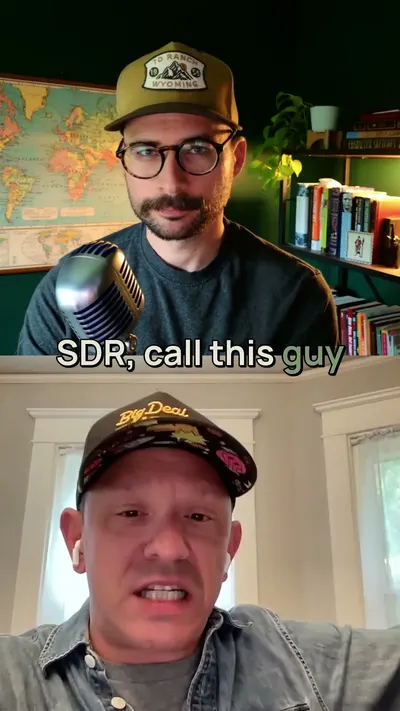
You hosted the dinner. The room was right and people opened up. The follow-up email you sent on Friday is still sitting there unanswered. Your sales leader wants to know where the opportunities are, and you're not sure what to tell them. I talked with Joe Fontana on this episode of Pipeline. Joe runs intimate dinner events for B2B companies. He says most teams lose the pipeline those dinners create at the first follow-up, when the guest starts to feel like a prospect.
Why do B2B events end with nothing to show for them?
Joe Fontana, CMO at Amzai, says the pipeline from a good event is usually lost after the event, in the follow-up. He told Joseph Lewin that "99% of companies get it wrong" at this step. The seller hears a guest's pain, matches it to the demo and has an SDR book a meeting.
Companies come to Joe saying, "We went to this great event. We met all these awesome people, but we've got nothing to show for it." In the pattern he describes, the seller leaves the dinner already mapping what the guest said to the demo and the dashboard, starts on a proposal, and asks the SDR to call and set up a demo. Joe's verdict on that sequence: "Done. Back to zero."
"The moment this prospect feels like a prospect, you're done."
Joe Fontana, Chief Marketing Officer at Amzai
His reason is about who the guest actually is. The guest didn't come to the company with a problem. They "spoke to seven, eight, 11 of their peers through a pain, and that's all they've done." To Joe, that person "is still a guy that had a conversation, enjoyed what he learned, and is willing to have more conversations if you position it correctly."
"The only person who knows that that person is a prospect is the seller."
Joe Fontana, Chief Marketing Officer at Amzai
Who should lead the conversation at a dinner event?
Joe Fontana runs each dinner under the guidance of a subject matter expert from the client's company, not a seller. Sellers can be in the room, but Joe says they come "only with a series of questions." Guests are picked by the titles, roles and companies the client wants to target, and every dinner is built around a pain.
This is how Joe sets up the room:
- The pain is the draw. Joe asks what would motivate someone "to go an hour out of their way to sit down in a room of complete strangers" at a venue that's nice but "no place special." He doesn't want the client's brand or the venue doing the lifting. For his own Amzai dinners, he picks topics like sales and marketing alignment, or how to drive human connections in a world of automation and AI.
- Branding stays subtle. Joe doesn't even want the client's branding in the room. "We put them on the menus."
- Nobody pitches. He says there's "no coyly dropped case study." His brand is known for one thing: you're not getting pitched.
- Sellers listen. Joe says sellers in the room hear "things that a buyer would never say to the seller," as guests turn to each other and say, "Walk me through this again."
"And more often than not, you're not having the conversation. You're witnessing a conversation."
Joe Fontana, Chief Marketing Officer at Amzai
How should you follow up after a B2B dinner event?
Joe Fontana's follow-up starts with the subject matter expert, not the seller. The SME does what Joe calls "a lap" with each guest. That's typically a 40-minute call, and the SME brings the seller in partway through. The seller asks about what the guest said, and takes over only after a call or two.
Joe walked through how it worked for a well-known cybersecurity client:
- The seller holds back after dinner. Joe says many organizations want the seller in right away ("Hey, dinner's over, seller, get in there."). His answer: "No, it's not the time for the seller to get in there. That person is still in a relationship with the SME."
- The SME introduces the seller. On the call, the SME brings the seller in: "I want you to trust my friend. Here's my friend."
- The seller asks questions. The seller goes back to the guest's own words ("Hey, you had said this, you had said that.") instead of trying to tie them to a feature.
- The baton passes. By the end of the lap, the seller knows whether this is an opportunity or "an opportunity in waiting."
"The time to pitch will come, but I've earned it."
Joe Fontana, Chief Marketing Officer at Amzai
Joe contrasted this with a sales team that skipped the extra step and gave every guest a code to register for a demo as they left. From 13 people in the room, they got one demo. Done his way, he said, "You'd have 10 people that you're sitting down having a conversation with." The cost is everybody's schedule slowing down by a week for one extra conversation. Joe says it's a conversation you can walk out of saying "I think we need to show you the tool now," and then asking:
"What are five things you'd need this tool to show you when I show it to you next week?"
Joe Fontana, Chief Marketing Officer at Amzai
What to Try on Monday
- Pick a subject matter expert from your team to host your next dinner, and tell any sellers attending to bring questions only.
- Move your logo to the menus and take case studies off the agenda.
- At the dinner, tell guests you're putting time on their calendars for next week, as Joe Fontana does at his own dinners, and make the SME the person on those calls.
- On that call, have the SME introduce the seller. Have the seller ask about what the guest said, not show features.
- Close the second conversation by asking which five things the guest would need the tool to show them next week.
How do you plan a B2B event backwards from pipeline?
Joe Fontana says to reverse engineer every event, starting from the end. First, define what makes the event a success: a deal, five deals, or a number of opportunities, which he calls the wiser approach. Wanting 50 opportunities calls for a much bigger event. If five or six opportunities is the goal, dinners make sense.
Then work backwards through the questions Joe asks:
- How does the prospect feel, and what's the process like for them?
- What drew them to that conversation in the first place? (The dinner.)
- What drove them to the dinner?
- Are these the right companies, and the right people?
Joe notes this is sometimes a five or six-person undertaking at a company. He also says being an objective third party is what lets him get to the pain.
"You always need to start at the end. Everybody wants to start at the beginning."
Joe Fontana, Chief Marketing Officer at Amzai
What should you keep out of a dinner event?
Joe Fontana keeps the host company's credentials and perks out of the room. He says the restaurant's carpet matching your logo, a Michelin-starred chef or "20 guys at a Yankee game" aren't the right reason for a dinner, and neither is your solution: "How you fix their problem is not the right reason." He grants that those tools can be effective, but they don't make someone feel heard.
Awards stay out too. On a Business Insider award, Joe's line was "Great. Keep it home." He says the goal is getting down to "the why. Not the why you, but why me?"
"I don't give two squirts about your features and benefits. No, I'm not mentioning to anybody where you sit in Gartner's Magic Quadrant."
Joe Fontana, Chief Marketing Officer at Amzai
Why do in-person events matter more now that outreach is automated?
Joe Fontana has been in events on and off for about 15 years. He says conversation is the one thing in sales that hasn't changed. With so much automation, prospects "aren't feeling heard. They're feeling like a number." That makes intimate events more important than ever, as long as they make people feel heard.
Joe says many teams mistake "feeling heard" for telling the prospect their problem and how the company fixes it. He compares the right approach to a partner who's venting. The instinct is to ask how you can help, and the answer is often that they just want you to listen.
"And events need to be more along the lines of the listening spouse."
Joe Fontana, Chief Marketing Officer at Amzai
Joe says the conversations where somebody feels heard, "where it's almost cathartic or therapeutic for them," happen "in the back rooms of Capital Grille and Morton's all over the world." Of one private room, he said that when guests "feel those doors close," they "feel they can say anything."
Once the SME-first follow-up is running, keep an eye on your next guest list. Joe described guests who weren't ready to buy asking whether a dinner was coming up for a friend. Count those requests alongside the demos.
Frequently asked questions
Should sellers attend B2B dinner events?
Joe Fontana says a couple of sellers can be present, but the room is guided by a subject matter expert from the company, and the sellers come only with a series of questions. Their job is to listen. "Seller needs to know you got two ears and one mouth," he says. Guests talking among themselves say things a buyer would never say to a seller, and sellers are "not here to fix anything."
Do virtual events work for building pipeline?
Joe Fontana says "virtual events work too," because they still give people the opportunity to be heard. He says they aren't as intimate as a dinner, but for a time they were the only intimacy available. He describes virtual formats like "Bonding over a box of chocolates, everybody sipping through the same whiskey," and says they create bonding opportunities when they're done right.
Where should a pipeline dinner event be held?
Joe Fontana wants a venue that's nice but "no place special," because he doesn't want the venue or the client's brand doing any of the lifting. He says conversations where somebody feels heard happen "in the back rooms of Capital Grille and Morton's all over the world." Describing a room in the basement at Morton's, he said "it's got a nice private room," and guests open up once the doors close.
What is a big trade show like Dreamforce good for?
Joe Fontana says a trade show like Dreamforce isn't the place to earn the right to pitch someone. "Dreamforce is where you earn the right to be remembered." The test he gives is whether the prospect, once back at the office, opens your email the first time they see it because they remember you from the show, or opens it and unsubscribes.
How do dinner events lead to referrals?
Joe Fontana describes guests who aren't ready to buy offering introductions instead. One example he gave: "Hey Joe, considering I'm four months away from doing anything, any chance you got one of those dinners coming up for my friend?" In Joe's example, the answer when no dinner is coming up is "go meet him for coffee," and the guest replies, "Let me go make an introduction now."
This article is based on Episode 7 of Pipeline featuring Joe Fontana, Chief Marketing Officer at Amzai.
Show notes & linksGuest links, resources and the full episode description
💡 Summary
After a great event dinner, handing the name to an SDR to book a demo is how the pipeline goes back to zero.
On this episode of Pipeline, Joseph Lewin talks with Joe Fontana, Chief Marketing Officer at Amzai, about running small dinner events where prospects feel heard instead of pitched. A subject matter expert from the client's company hosts Joe's rooms, not a seller, and comes only with a series of questions. The client's branding stays subtle, on the menus. The sellers who attend listen while prospects talk among themselves. After the dinner, the SME does a "lap" with each prospect, typically a 40-minute call, then hands the baton to the seller. Joe describes what happened when one sales team skipped that step and gave everyone a code to register for a demo as they left: 13 people in the room produced one demo.
Sponsored by Podcast 2 Pipeline
✅ What you can use by Monday
- Put a subject matter expert in charge of the dinner instead of a seller, and send them in with questions, not case studies.
- Keep your brand and the venue from doing the work, so the pain on the agenda is what brings people to the table.
- Book a call between the SME and each attendee before a seller gets involved, and let the SME introduce the seller.
- Add one more conversation before the demo, and use it to ask what five things the prospect needs the tool to show them.
- Decide how many opportunities the event should produce, then work backward to the companies and people who need to be in the room.
🕐 Chapters
Why events and pipeline don't always go together
Making prospects feel heard, not pitched
AI, automation and the missing human element
What one of these dinners looks like in practice
Why events fail when sellers start selling
The SME lap and baton handoff for a cybersecurity client
Reverse engineer the event and do real research
The 13 people, one demo problem
🎙️ About Pipeline
Pipeline is short conversations with GTM peers who are actually filling pipeline right now, so you leave with something you can use by Monday. New episodes weekly on Apple Podcasts, Spotify, and wherever you listen. Produced by Podcast 2 Pipeline.
🏷️ Tags
B2B events, event follow-up, dinner events, pipeline generation, subject matter experts, demos, SDR handoff, sales and marketing alignment, prospect research, AI and automation, Dreamforce
Enjoying Pipeline?
Could you help us out? Following the show and leaving a five-star rating helps more people find it. It takes a minute, and we really appreciate the support.
On Spotify, tap Follow on the show page, then the star rating under the description.
More from Pipeline
How One Referral Partner Can Change Everything (with Derek Morgan from Refer2u)
💡 Summary Two coffees with a referral partner introduction that had sat untouched in a CRM for two years turned into $11.2 million in six months. Most teams chasing cold leads already have pipeline sitting in their CRM and their existing network. On this episode of Pipeline, Joseph Lewin talks…
You'll Get Tired of Your Point of View Before Buyers Do (with John Rougeux from Flag & Frontier)
A strong point of view never reaches the market until the executive team agrees on it. On this episode of Pipeline, Joseph Lewin talks with John Rougeux, Founder at Flag & Frontier, about building a strategic narrative and what happens after the work is done. John compares the forgettable brand…
Do the Thinking Before You Go to AI (with Sanjana Balaraman)
The more you lean on AI for your posts and cold emails, the closer they drift to the median. Everyone in sales and marketing is using AI now, and that's why so much of the copy reads the same. On this episode of Pipeline, Joseph Lewin talks with Sanjana Balaraman, Founder at ChapterOne Creative,…